- Nouveau

Endgames with a rook and minor piece against a rook and minor piece occur surprisingly often in practice - even more frequently than the classical pure rook endings, long considered the royal discipline. Yet chess literature has so far paid little attention to these complex and multifaceted positions. This book sets out to close that gap and to explore a field of great practical importance for ambitious players.
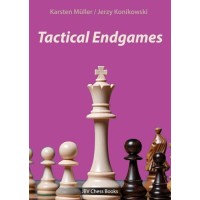
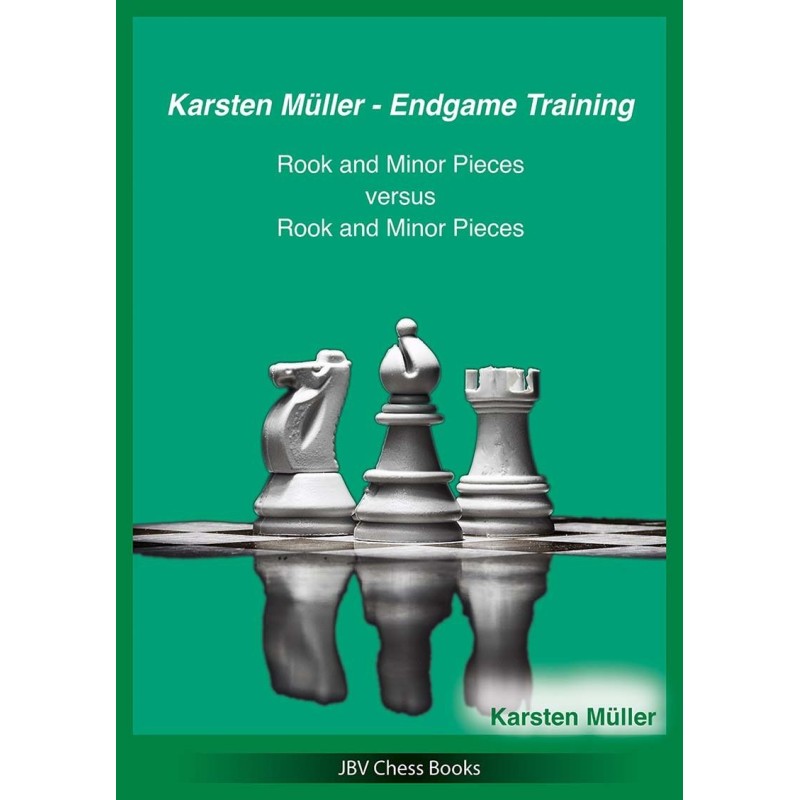
Endgame Training : Rook and Minor Pieces versus Rook and Minor Pieces by Karsten Müller.
Endgames with a rook and minor piece against a rook and minor piece occur surprisingly often in practice - even more frequently than the classical pure rook endings, long considered the royal discipline. Yet chess literature has so far paid little attention to these complex and multifaceted positions. This book sets out to close that gap and to explore a field of great practical importance for ambitious players.
The hallmark of these endings is their remarkable variety. Since different material configurations call for their own rules of thumb and strategic plans, these are worked out systematically here to provide the reader with a reliable framework of orientation.
Special emphasis is placed on the configuration rook and knight versus rook and bishop. Depending on whether the side with the knight or the bishop has the advantage, these endgames can follow completely different courses. In practice, this distinction proves extremely useful for realistically assessing the typical plans, strengths, and weaknesses of both sides.
In addition, the book also covers positions with two rooks and minor pieces on each side. These often retain a pronounced middlegame character, not least because the mating potential is greater and the tactical possibilities more numerous.
Each chapter follows the same proven structure: first, carefully selected practical examples are presented, thoroughly analyzed and explained. These are followed by well-chosen exercises designed to help reinforce the acquired knowledge in an active way. Those who seriously engage with these exercises will sharpen their understanding of the subtleties that so often make the difference in practical play.
With this book, all players who wish to refine their endgame technique and achieve real progress gain a systematic reference work, a practical training course, and an inspiring source of ideas in one.
Fiche technique
Endgames with a rook and minor piece against a rook and minor piece occur surprisingly often in practice - even more frequently than the classical pure rook endings, long considered the royal discipline. Yet chess literature has so far paid little attention to these complex and multifaceted positions. This book sets out to close that gap and to explore a field of great practical importance for ambitious players.